
Orion Nebula
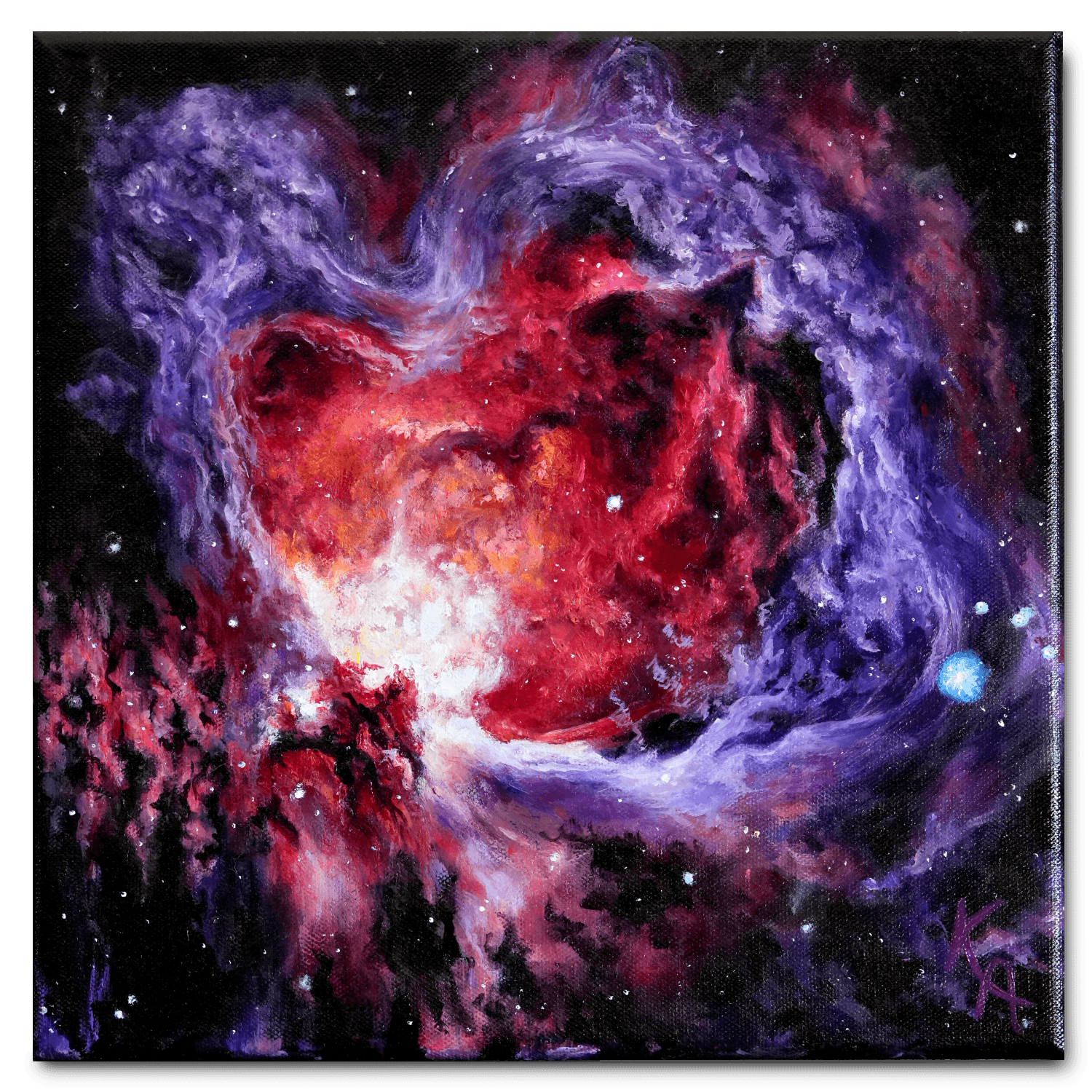
Size
30×30cm
Year
2026
Astronomical Oil Painting - When a Photograph Becomes Physical
What if an astrophotograph could reveal something new every time the light changed?
This painting of the Orion Nebula began with an astrophotograph published by NASA. But the goal was never simply to reproduce the photograph on canvas.

It is the second astronomical painting I have created. The first one was painted in 2024, which makes these two works an interesting record of my development as an artist. With this second interpretation, I wanted to push the idea much further: to create a physical artwork that could communicate something photography alone cannot.
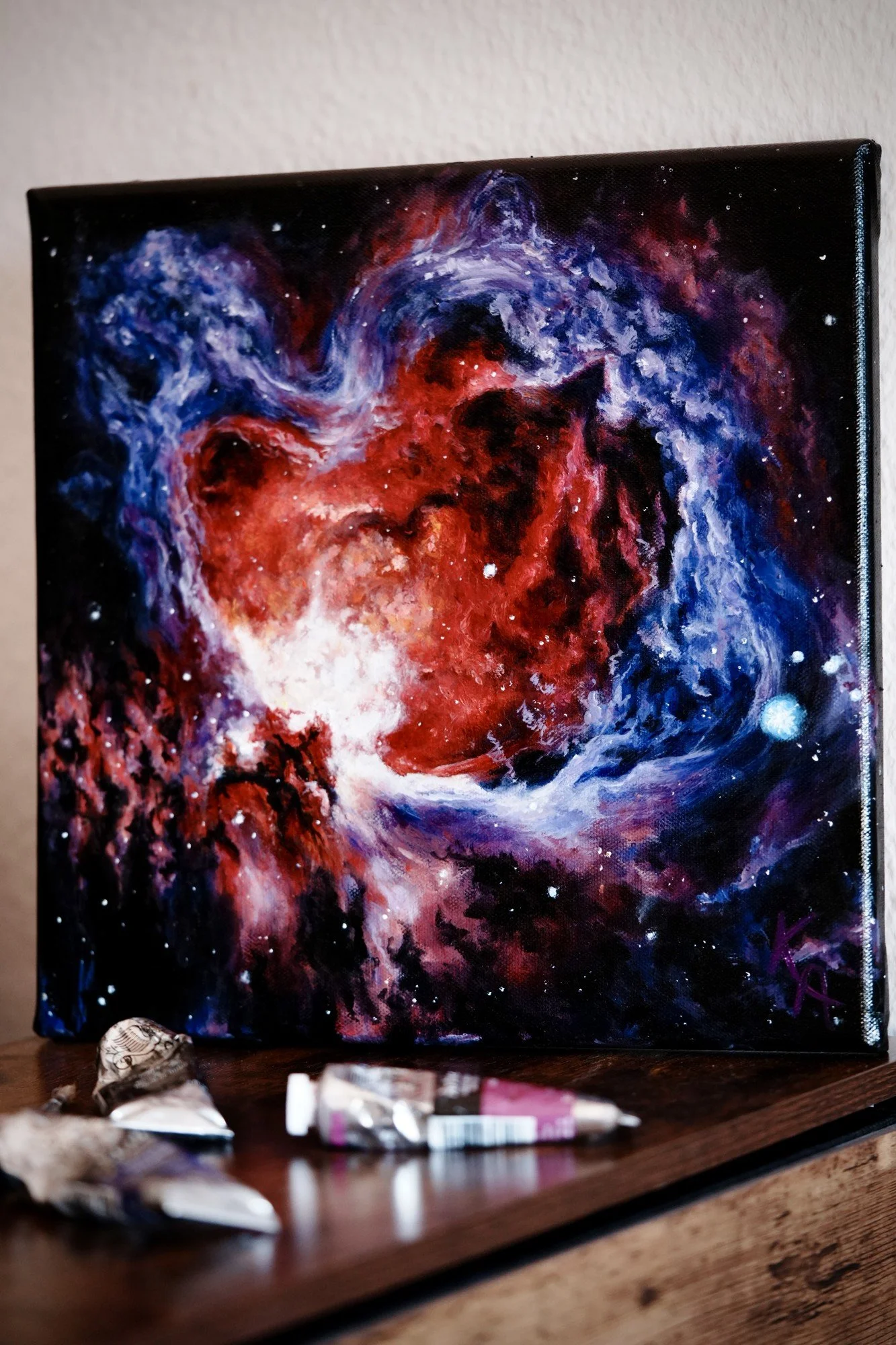
Astrophotography is already a kind of visual translation.
Telescopes collect information from different parts of the electromagnetic spectrum, including wavelengths that human eyes cannot see. Scientific imaging can combine this information and translate it into colours that allow us to visualise structures and phenomena that would otherwise remain invisible to us.
But even the most spectacular photograph is still a static representation.
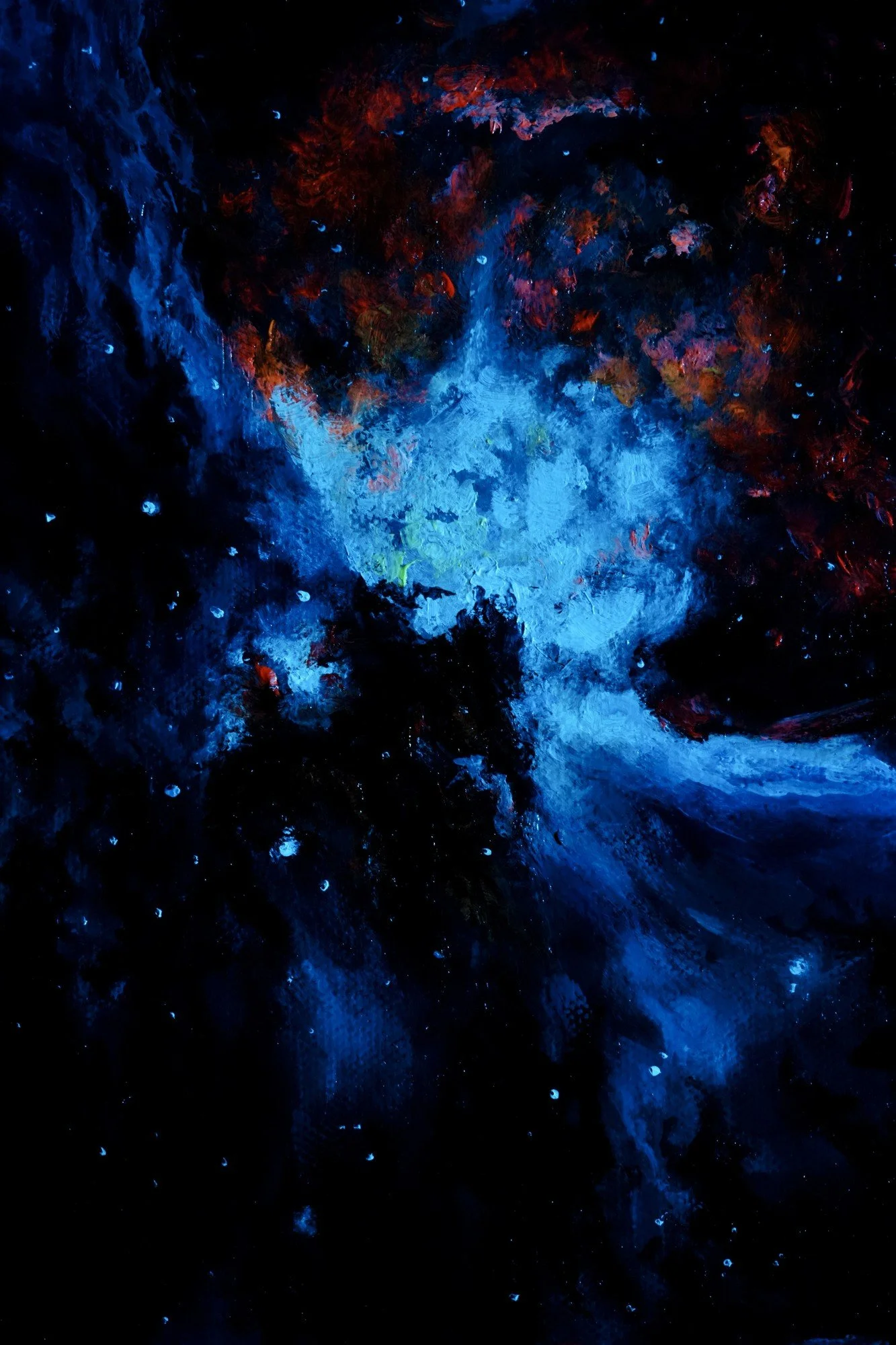
For this painting, I wanted to make the artwork itself respond to different kinds of light.
I used neon pigments in orange, red, blue and violet to build the nebula. In ordinary daylight, the painting comes together as a coherent image, resembling the extraordinary colour combinations of an astrophotograph.
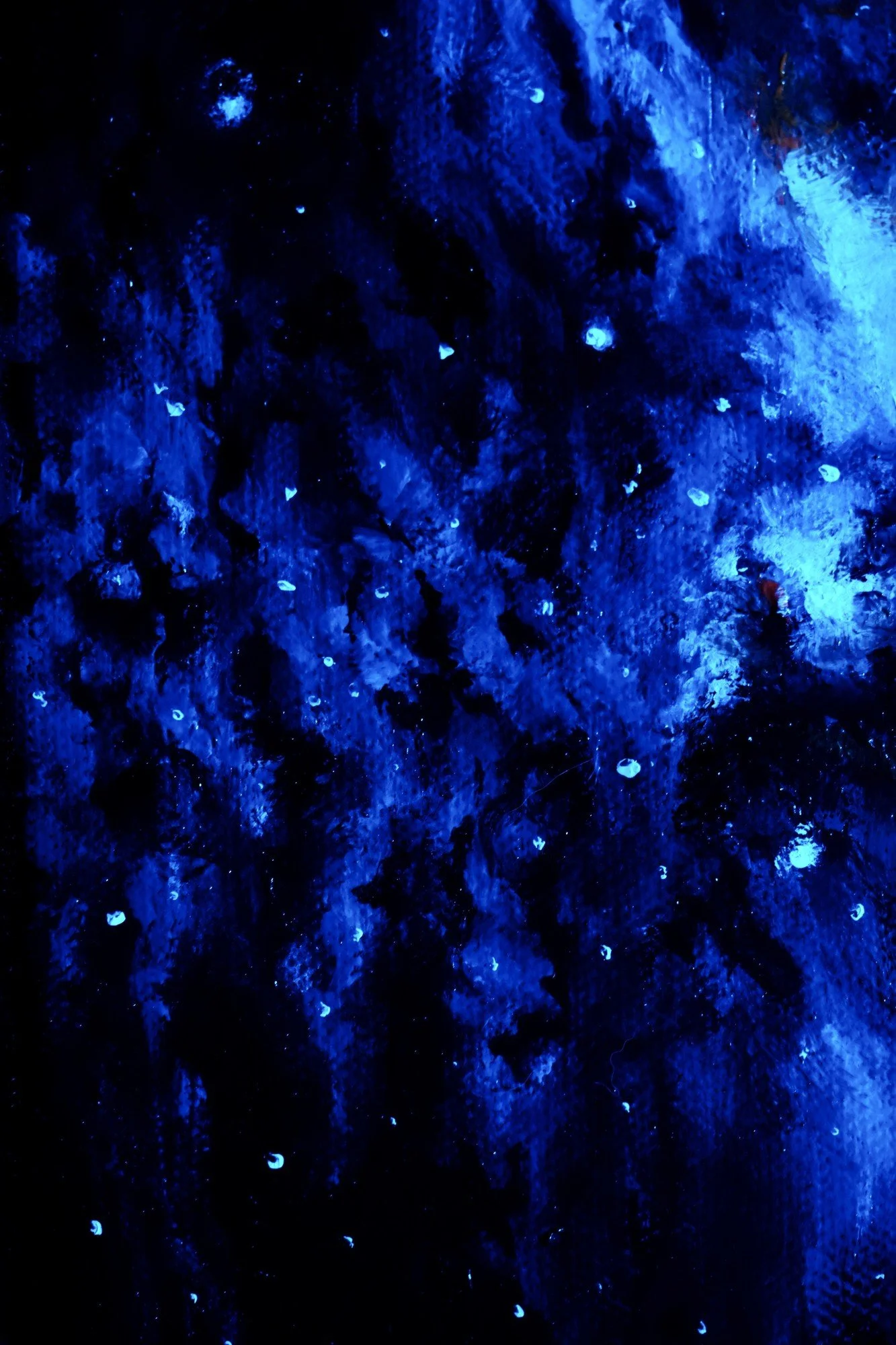
Then the light changes.
Under different RGB lighting filters, different areas of the painting emerge, shift in colour and reveal new visual relationships. One lighting setup may bring one cloud of the nebula forward, while another makes a different region glow.
The effect is not simply decorative. It echoes the principle behind astronomical imaging: different wavelengths carry different information, and changing the way we illuminate or interpret that information allows us to perceive different parts of the same object.
The Nebula Under Different Light
Under blue light
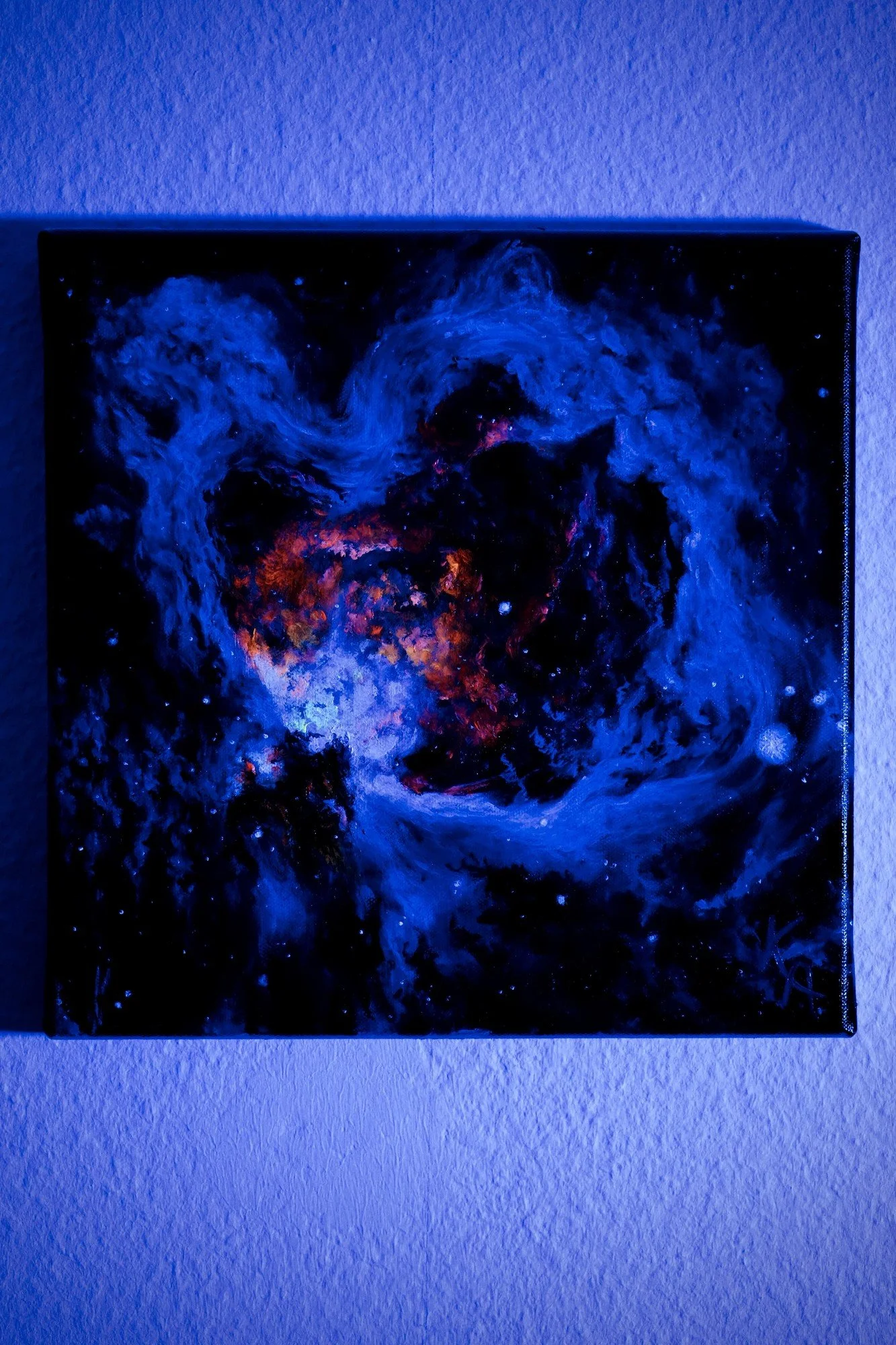
A cooler spectrum brings out different structures within the nebula, shifting the balance of the composition and making some regions appear to emerge from the darkness.
Under violet light
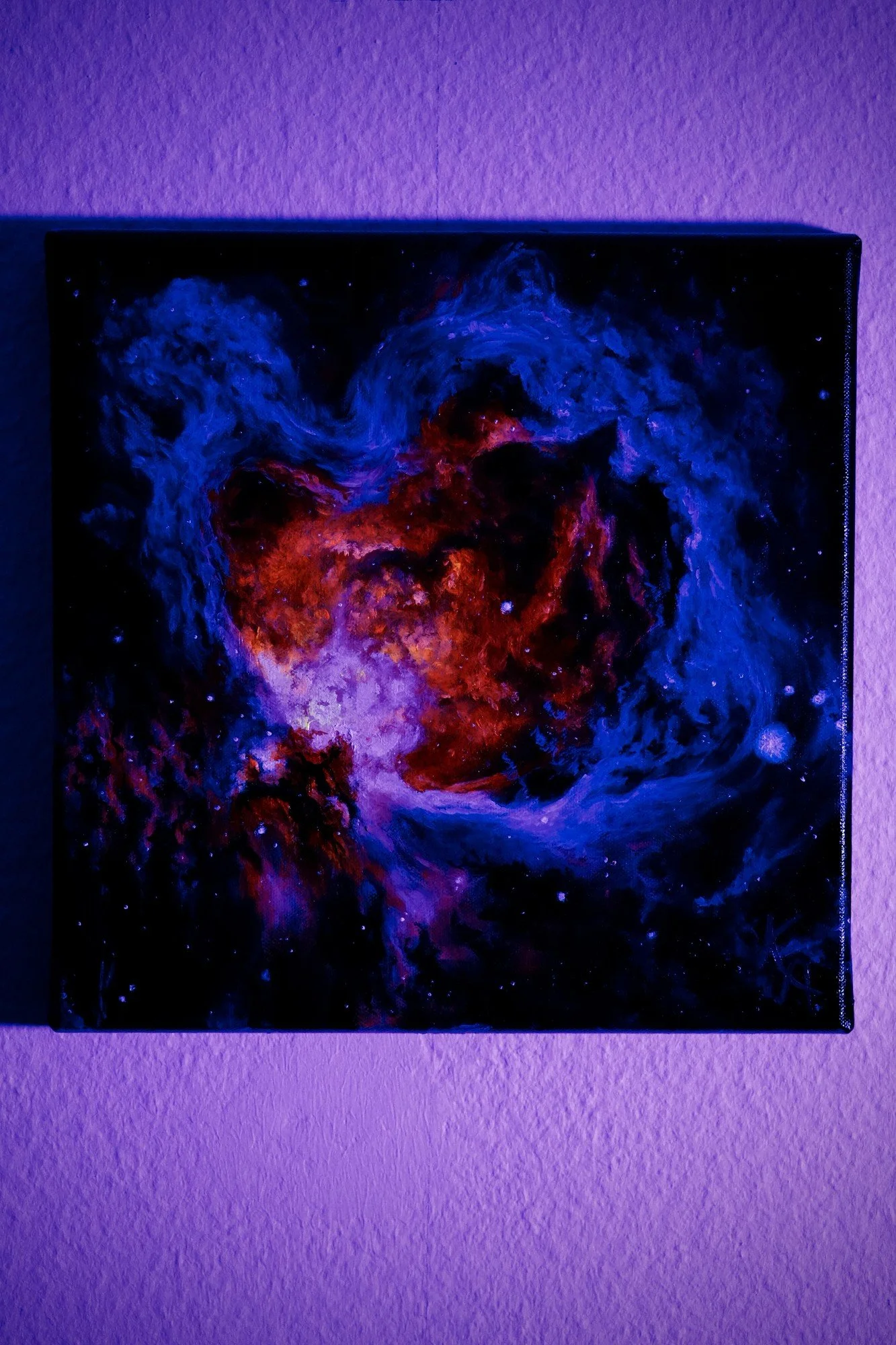
Violet illumination reveals another layer of the painting, changing the apparent colours and drawing attention to different clouds and areas of the nebula.
Under red light
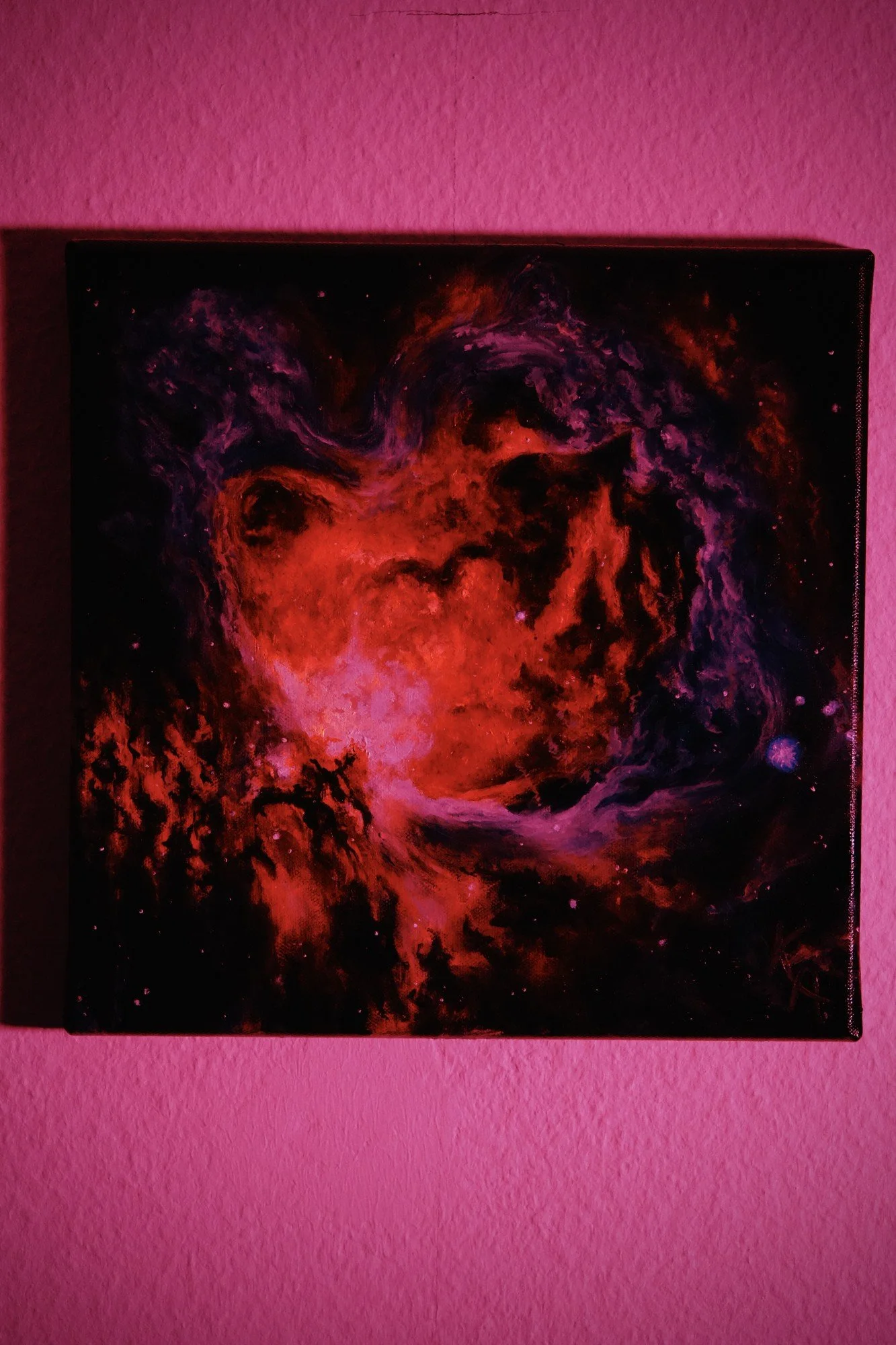
Each lighting condition creates a slightly different version of the same artwork.
The painting therefore exists in several visual states. Daylight gives you one image. Blue light gives you another. Violet reveals something else again.
It becomes a small experiment in light, colour and perception.
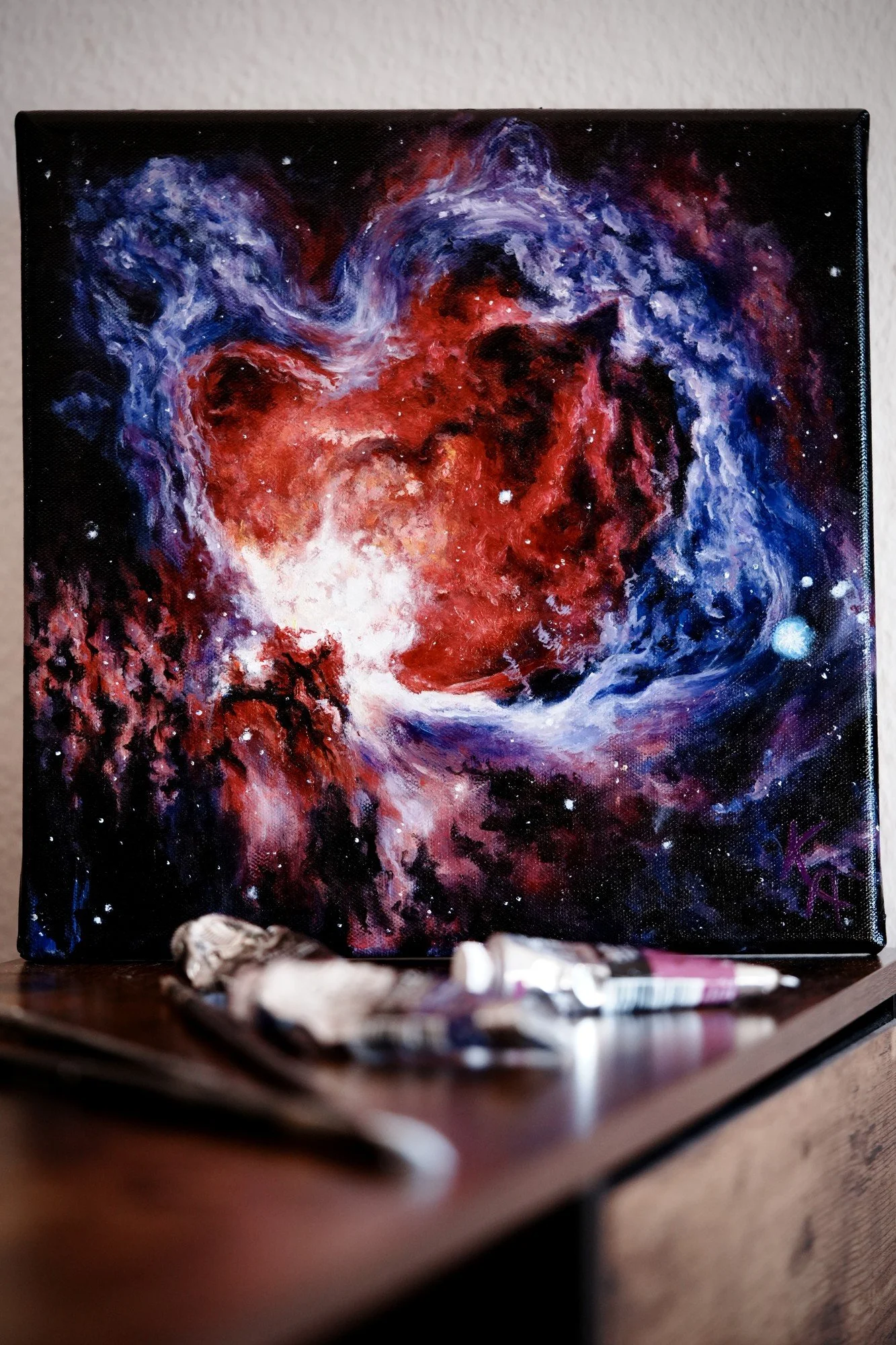
Artwork Summary
Subject: Orion Nebula
Reference: NASA astrophotography
Medium: Oil painting with fluorescent / neon pigments
Concept: Artistic interpretation rather than direct photographic reproduction
Special effect: Appearance changes under different RGB lighting
Colours: Neon orange, red, blue and violet
Concept focus: Translating invisible information and changing light into a physical artwork
Availability: The original painting is available for purchase
Bring a Piece of the Universe Home
This painting is for people who are fascinated by space, astrophotography, astronomy and the strange beauty of things we cannot experience directly with our own eyes.
It is also a piece about the limits of perception.
The Orion Nebula is there whether we can see all of its colours or not. A telescope can collect information our eyes cannot. A photograph can translate that information into an image. And a painting can take the idea one step further, making the colours physical and allowing the artwork itself to change as the light changes.
The original Orion Nebula painting is available for purchase. If Orion is not the part of the universe you would choose, you can also commission your own astronomical painting based on another celestial object, from a nebula or galaxy to another corner of deep space. Choose the object that fascinates you, and I can turn its colours, light and hidden structures into a one-of-a-kind physical artwork.

An original oil painting of the Orion Nebula, based on a NASA astrophotograph and painted as an artistic interpretation rather than a copy. Neon pigments in orange, red, blue and violet make the painting change with the light. In daylight you see the full nebula. Under blue, violet or red light, different clouds come forward and the colours shift, so one painting gives you several different views.
Medium: oil with fluorescent / neon pigments on canvas
Special effect: appearance changes under coloured (RGB) lighting; lamp not included
Original: hand-painted, not a print
Prefer a different nebula or galaxy? I also paint custom astronomical commissions.
📦 Payment and delivery:
Worldwide shipping via DHL
Payments via Apple Pay, Visa / MasterCard, Klarna, PayPal or direct bank transfer
And by the way, oil paintings are proven to last for centuries.
Reserve Your Custom Portrait
This 10% refundable deposit reserves a place for your portrait in my painting schedule and starts the creation process.
The remaining balance is due only after you have seen and approved the finished painting.
If, after the revision process, you decide that the portrait is not right for you, your deposit will be fully refunded.